How Does Replication Actually Get Set Up?
There are only 3 real ways in practice.
Way 1 — Operator (Best / Production Way)
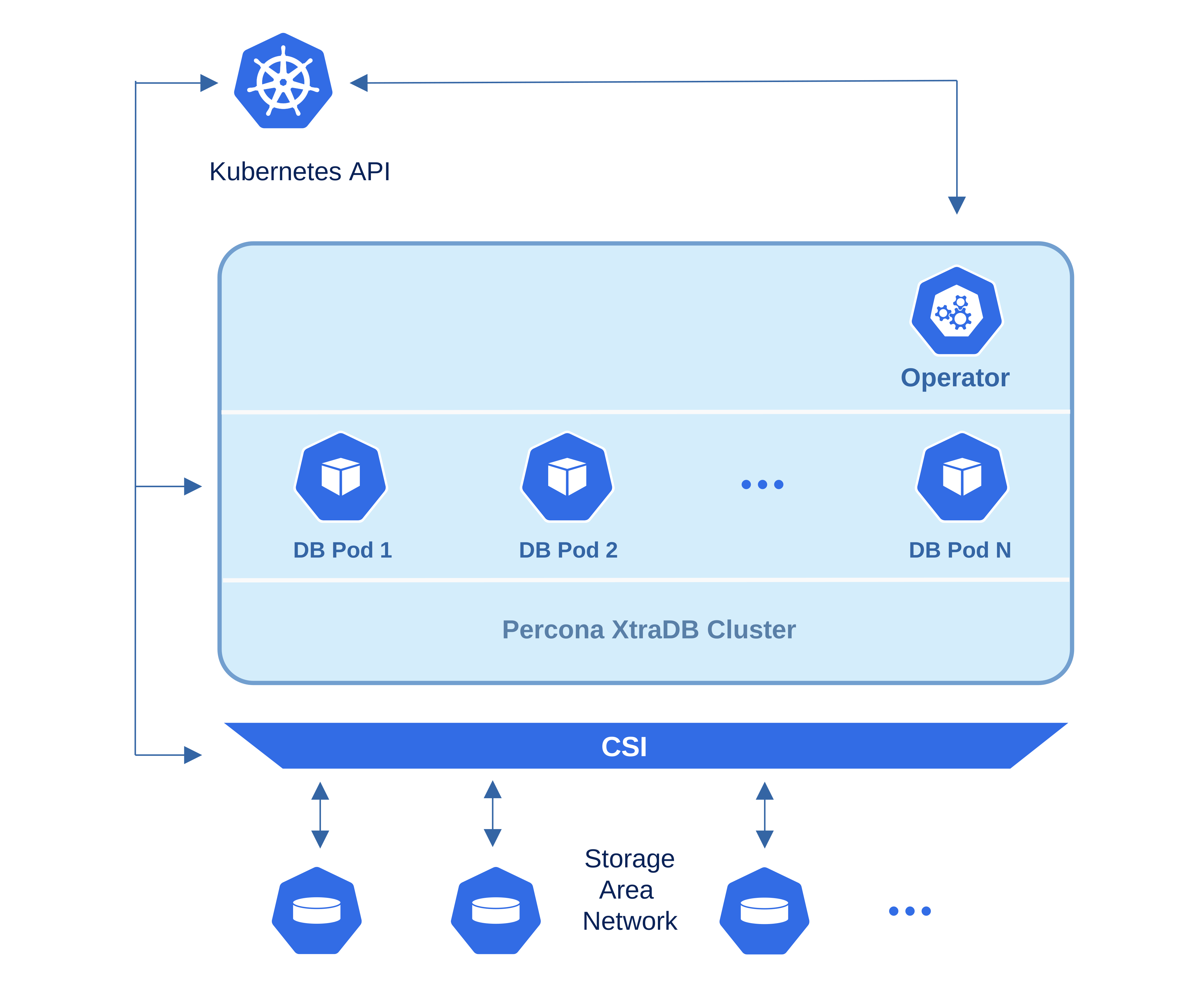
This is how serious teams do it.
You install a MySQL Operator, for example:
- Oracle MySQL Operator
- Percona Operator
- Bitnami Operator
What operator does:
You: "I want 3 MySQL replicas"

Operator:
✔ Creates StatefulSet
✔ Configures my.cnf
✔ Creates users
✔ Runs replication SQL
✔ Sets primary
✔ Monitors health
✔ Handles failover
So:
Operator is the “DB Admin” inside Kubernetes.
You never run replication commands manually.
Way 2 — Helm Chart
Many Helm charts (Bitnami, etc.) do basic replication.
You install like:
helm install mysql bitnami/mysql \
  --set architecture=replication \
  --set replicaCount=2
Behind the scenes, chart:
- Generates configs
- Runs init scripts
- Sets up master/slave
Still automated, but less smart than operator.
Way 3- Manual
Complex and error-prone.
What Operator Really Does Internally
When a new pod comes up:
- Operator waits for mysql-1 to be Ready
- Connects to mysql-0
- Takes snapshot
- Copies data
- Runs CHANGE MASTER
- Starts replication
All automatic.
You never see it.
How to Run MySQL on K8s
If you’re serious about running DBs on K8s:
Learn MySQL Operator next.
It’s industry standard now.